
Grief
Grief is one of those things we all know exists, but very few of us know what it’s going to look like when it turns up at our door.
It can be enormous, or strangely quiet. It can have you crying in the supermarket, laughing at a ridiculous joke, sleeping for fourteen hours or staring at the ceiling all night… sometimes all in the same week.
None of that makes you a bad person. It makes you a person who has lost someone.
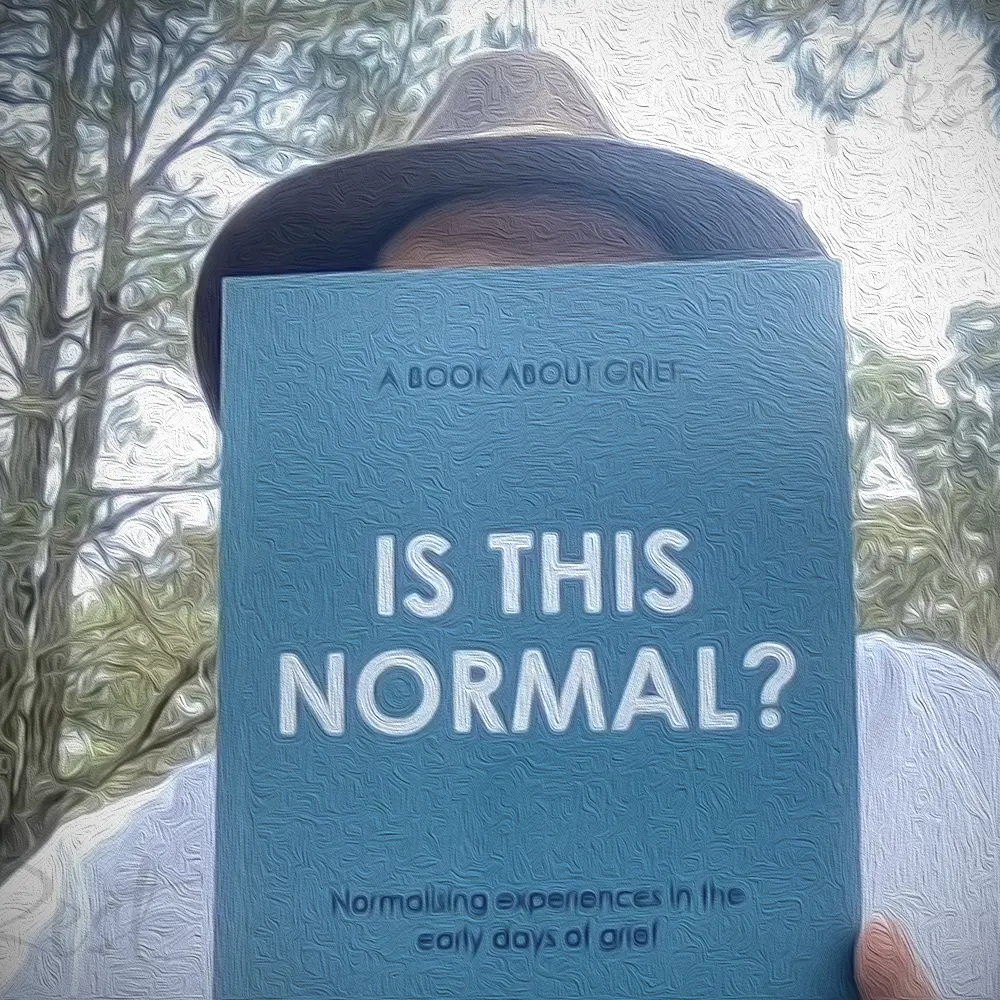
Before we go any further, I’ll say this. I’m not a grief specialist (as most ‘funeral directors’ are not). What I’ve written here comes from the families I’ve cared for, from losing my own mum, and from my friend Jo Lincolne’s book, Is This Normal?. Jo asks a really useful question, one I come back to a lot: what if much of what we go through in grief is more normal than we think?
There is no single way to grieve
There isn’t a right way to grieve, however much we’re led to believe there is.
You might feel sadness, anger, anxiety, numbness, relief, guilt, confusion… even happiness. Often people feel several of these in the same day. Grief isn’t a test you pass by having the right feelings in the right order.
You’ve probably heard of the ‘stages of grief’. It’s an idea that gets passed around a lot, but it was never meant to be an instruction manual, and most people’s grief doesn’t move neatly from one stage to the next. It goes back and forth, and that’s ok.
Your body grieves too
Grief isn’t just something you feel in your head, it can affect your whole body. You might feel exhausted, or restless. You might struggle to concentrate. Your appetite might disappear, or you might eat far more than usual. Headaches, an upset stomach, or just a general feeling that you’re not quite yourself… all very common.
Sleep can be particularly strange. You might lie awake for hours even though you’re exhausted, or sleep far more than you normally would. You might have vivid dreams, or dream that they’re still alive. You might wake for a moment and forget they’ve died, and then remember. Or you might stop dreaming altogether.
The important thing is not to assume everyone else is grieving ‘properly’ while you’re somehow doing it wrong.
You might laugh
This one surprises people.
And then the guilt arrives. How can I be laughing when they’re dead?
Because being devastated by someone’s death doesn’t switch off your ability to feel everything else. Some of the best laughs my family has had since Mum died have been about Mum. During lockdown we’d have Zoom dinners and she could never work out how to get her camera going. On at least one occasion she ‘rage’ quit, which only made the rest of us laugh harder. We still laugh about it.
Kids are great at this. A child can cry one minute and be happily playing the next. It doesn’t mean they don’t understand or don’t care, it’s how they move in and out of what’s happened. Adults are allowed to do it too.
You might not have been there when they died
This can be a really painful one.
It’s so easy to turn that into a story about what you should have done. But being there at the exact moment someone dies isn’t a measure of how much you loved them.
People sometimes seem to wait until they’re alone. Sometimes a person dies in the few minutes their family steps out of the room. We don’t always know why. What matters is all the time you were there, not the few minutes you weren’t.
You might feel relief
Relief can be one of the hardest feelings to admit to.

Relief doesn’t mean you wanted them to die, and it doesn’t cancel out love. It can simply mean that something incredibly hard has come to an end. You can miss someone terribly and be relieved they’re no longer suffering. You can be angry with someone and still love them. We’re more than capable of holding both at the same time.
You might not feel anything
Numbness is a really common response. Sometimes it’s like the mind puts the feelings somewhere out of reach for a while, and you find yourself organising the funeral, answering the phone, making sandwiches, talking to the doctor and doing the paperwork, all while feeling strangely detached from what’s happened.
Then weeks or months later, something small opens the door.
For me, it’s a piece of music. I’ve embraced this work and I deal with it pretty well, but if I’m at a funeral and someone plays Spiegel im Spiegel, I might need a minute to recalibrate…
There’s no rule that says grief has to start on the day someone dies.
A funeral can help, but it isn’t a prescription
A funeral or memorial can give people somewhere to put the enormous reality of a death. Seeing your person, writing something to say, making a coffin or decorating a Daisybox, playing their music, sitting quietly beside them, taking their ashes somewhere that meant something… or simply getting the people who loved them together in one place. These things can matter a great deal.
But there’s no one ritual that everyone needs.
Others want everyone they’ve ever known in the one room. Either way, a funeral should be there to serve the people who are grieving, not to make them perform grief in a particular way.
Children grieve differently
Kids often understand more about death than we give them credit for, but they don’t necessarily process it the way adults do.
Honest, simple information that suits their age is usually far more helpful than trying to protect them from every part of death. Give them room to ask questions, room to feel what they feel, and room to keep being kids.
My kids still talk about their Grammy often. Not long ago we had tears from my youngest before bed, and all I could say was, “It’s ok my love, cry all you want. It’s good to cry… it means you’re still thinking about her.”
And sometimes the best thing you can do is let them go outside and play.
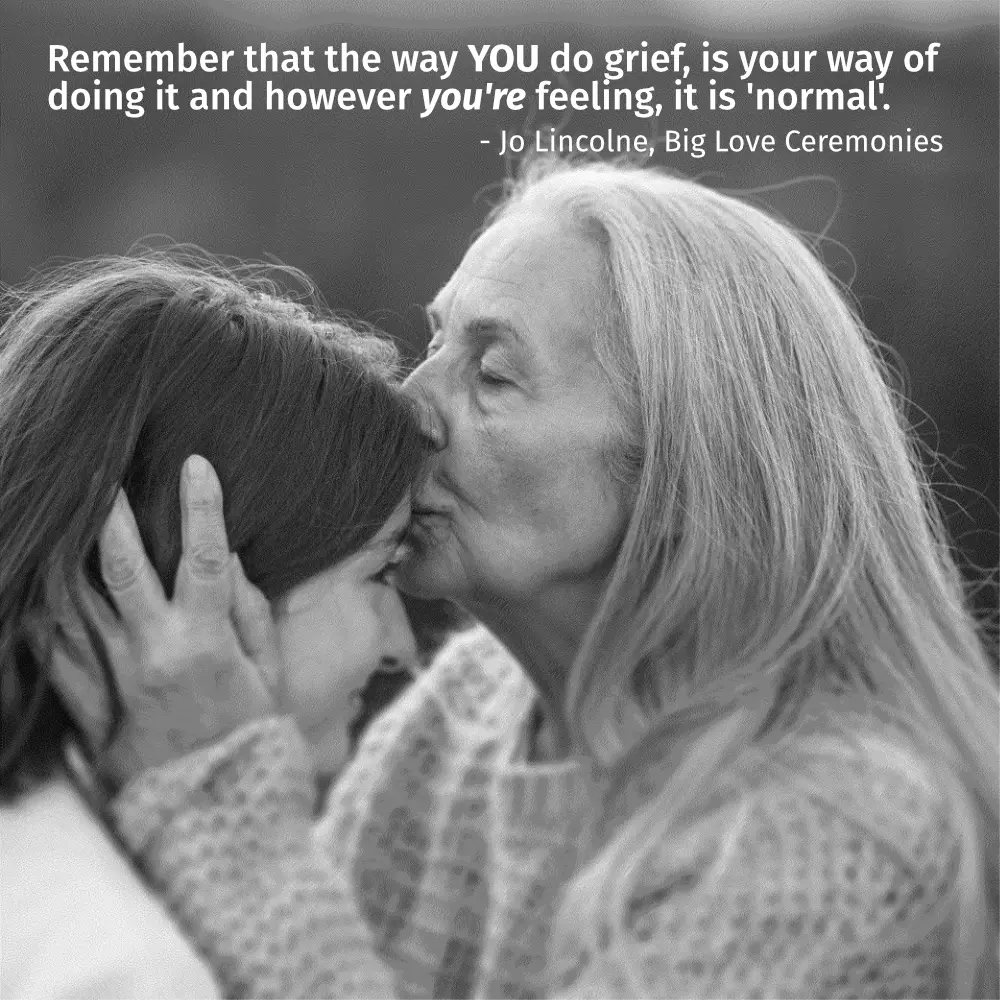
We don’t all grieve the same way
Grief can get harder when we look at how someone else is grieving and decide they’re doing it wrong.
Sometimes a person’s grief doesn’t fit what their family, culture or community expects of them. They might feel like they’re supposed to be devastated, but aren’t. Or they’re devastated, but don’t feel they can show it. That can add a whole other layer of hurt on top of the grief itself. There’s even a name for it, ‘dissonant grief’, when the way you’re grieving doesn’t match what you think is expected of you.
Most of us sit somewhere in between, because people are different and relationships are complicated. It’s worth giving others the same room to grieve differently that we’d like them to give us.
Grief doesn’t mean letting go
For a long time grief was talked about as something to ‘get over’. That doesn’t really fit with how most people actually live with loss. Your relationship with someone who has died changes, but it doesn’t have to disappear.
I flick through photos of Mum all the time and the kids see me doing it. That isn’t me failing to move on, it’s how she stays part of our lives. You don’t have to erase a relationship in order to keep living. Grief researchers call these ‘continuing bonds’, and they’re a normal part of grieving.
What helps?
There’s no magic list, but there are a few things a lot of people find useful.
Talk. Even if you tell the same story twenty times.
Move. A walk, a bit of gardening, a swim, or just getting outside can help your body carry some of what your mind is dealing with.
Rest. Sleep if you can. If you can’t, resting still counts.
Eat something. It doesn’t have to be perfect.
Get some sunlight. Even sitting outside for a while is worth it.
Do ordinary things. Cook something, fold the washing, mow the lawn, watch something stupid, have a cuppa.
Be around people. Or don’t, if people are exhausting right now. Just tell the ones close to you what you need.
Let yourself remember. Photos, music, stories, objects and places can all help you stay connected.
And don’t be frightened if some of these make you feel better for a while. You’re allowed to have a life while you’re grieving.
Grief changes
One of the strangest things about grief is how it changes. At first it might be everywhere. Then it isn’t. Then it is again. An anniversary, a birthday, Christmas, a song, a place you haven’t been since they died… any of them can bring it straight back. My very first client died on Christmas Day, and ever since, Christmas has been a time I think about the people going through that first year without someone.
A good day followed by a terrible day doesn’t mean you’ve gone backwards. Grief doesn’t keep to a timetable, and you don’t have to measure how you’re going by how often you cry.
When grief needs more help
Grief hurts, but there’s a difference between painful and unsafe.
If grief is making it really hard to function, if the distress is constant and overwhelming, if it’s seriously affecting your sleep, eating, work or relationships, or if you’re having thoughts of self-harm or suicide, please get professional help. That isn’t failing at grief. It’s getting a hand to carry something heavy.
Griefline (now part of SANE Australia) offers free grief and loss support for people 18 and over on 1300 845 745, Monday to Friday, 10am to 8pm (AEST). Lifeline is there 24 hours a day on 13 11 14.
If someone is in immediate danger, call 000.
There are more options in the resources section of our website, and while I’m not a grief specialist, I’m always happy to be a listening ear.
What I’ve learned
Working around death has changed the way I think about grief. I don’t think it’s my job to tell anyone how to grieve, and I don’t believe there’s a set of stages to tick off. A funeral can’t fix grief either. And the person who looks the least upset at a funeral isn’t necessarily the one who cares the least.
What I can do is make things a little easier around the edges. Give people clear information, and time. Tell them when something really does need to happen, and when it doesn’t. Let them make their own choices, sit with their person, laugh, cry, or be completely overwhelmed… whatever it is they need.
And sometimes, just remind them:
What you’re going through doesn’t have to look like anyone else’s grief.
You loved someone, and they died. Working out how to live with that takes time, and it looks different for everybody. There’s no prize for doing it ‘correctly’.
This article is here as information and reassurance. It isn’t a substitute for professional mental health or medical advice.