
Death and Children
Talking to kids about death can feel daunting, especially when the person who has died is someone they love. It’s natural to want to protect them from the sadness. But kids are part of the family, and death is part of life. Simple, honest explanations help them understand what’s happened, and give them permission to grieve in their own way.
Start before you have to
One of the best things we can do is talk about death before kids are faced with it. Not a big heavy conversation, just noticing the world around them.
A bird dies. A family pet grows old. A plant begins, grows and eventually dies.
Little moments like these show kids that living things have lifetimes. So when death does touch someone they love, the idea isn’t completely new.
A book that helped our family
There’s a beautiful children’s book called Beginnings and Endings with Lifetimes in Between, written by Bryan Mellonie and illustrated by Australian artist Robert Ingpen.
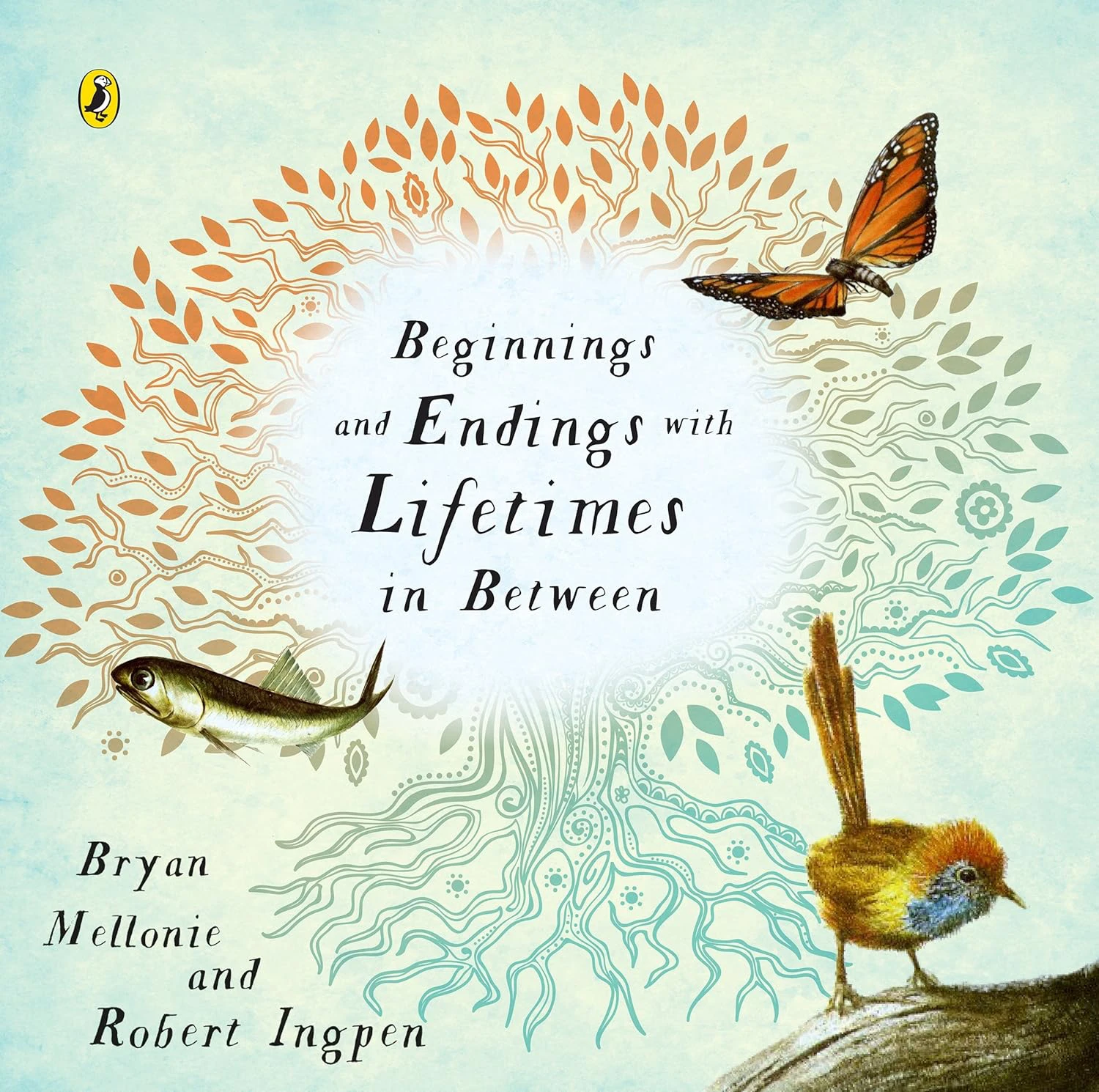
It’s about the idea that every living thing, people, animals, birds and plants, has a beginning, an ending and a lifetime in between. It doesn’t try to explain what happens after death or push any particular belief. It just gives you and your kids somewhere to start, with Ingpen’s gorgeous illustrations to look at while you talk about something that can be hard to put into words.
Why it matters to me
Before Mum died, she gave us this book to read to our kids. Rather than avoiding the subject, she gave us a way to start talking about it with them while she was still here. She even wrote about it in the letters she left for her grandchildren: “with Beginnings and Endings, we cannot choose our lifetime.”
That’s why it’s part of the MyRest resources.
Use simple, honest words
Clear language is kinder than euphemisms.
Young kids take words very literally. Tell a child that Grandad has “gone to sleep” and you might end up with a child who’s frightened of going to bed.
You don’t have to explain everything at once. Something like:
“Grandad has died. His body has stopped working and he won’t be coming back.”
is often enough to start with. If they ask another question, answer it honestly, and wait for the next one.
Let them set the pace
Kids don’t always grieve the way adults expect.
None of that means they don’t understand or don’t care. Kids move in and out of grief, taking in a little at a time and coming back with another question when they’re ready.
Some kids go quiet, some get clingy or angry, some ask lots of questions and some carry on as normal. Their understanding changes as they grow, too. A four-year-old, a ten-year-old and a teenager will all see death differently, so you’ll probably have this conversation more than once. That’s ok. You don’t have to explain death perfectly, you just have to keep the conversation open.
It’s ok to say “I don’t know”
You don’t need an answer for everything. If you can’t answer something, it’s perfectly fine to say:
“I don’t know. That’s something I wonder about too.”
What matters is that they know they’re safe, loved, and can ask you anything.
Kids can be part of funerals
There’s no rule that says kids should be kept away from funerals. Whether they come depends on their age, their relationship with the person, their personality and what the family wants, but many kids benefit from being included, as long as they know what to expect.
Tell them beforehand who’ll be there, what will happen, and that people might cry. If there’s a viewing, explain that too in words they understand. And give them a choice where you can. No child should be pushed to speak, touch or go near the person who has died if they don’t want to.
When Mum died, we never hid any of it from our kids. They drew on her Daisybox and painted the saw horses it rested on, and we treated each step as part of grieving together.
A gentle place to begin
If you’re looking for a way to start, Beginnings and Endings with Lifetimes in Between is a wonderful one. Don’t wait for a crisis. Read it on an ordinary day, talk about the pictures, notice the plants and animals, and let the questions come. Then, if one day your child asks about death, you’ll already have started the conversation.
Book details
Beginnings and Endings with Lifetimes in Between
Bryan Mellonie
Illustrated by Robert Ingpen
First published in 1983; later Australian editions include
Penguin/Picture Puffin.
The National Centre for Childhood Grief includes the book among its resources for children, describing it as a simple, matter-of-fact way to explore life, death, grief and the natural world.